

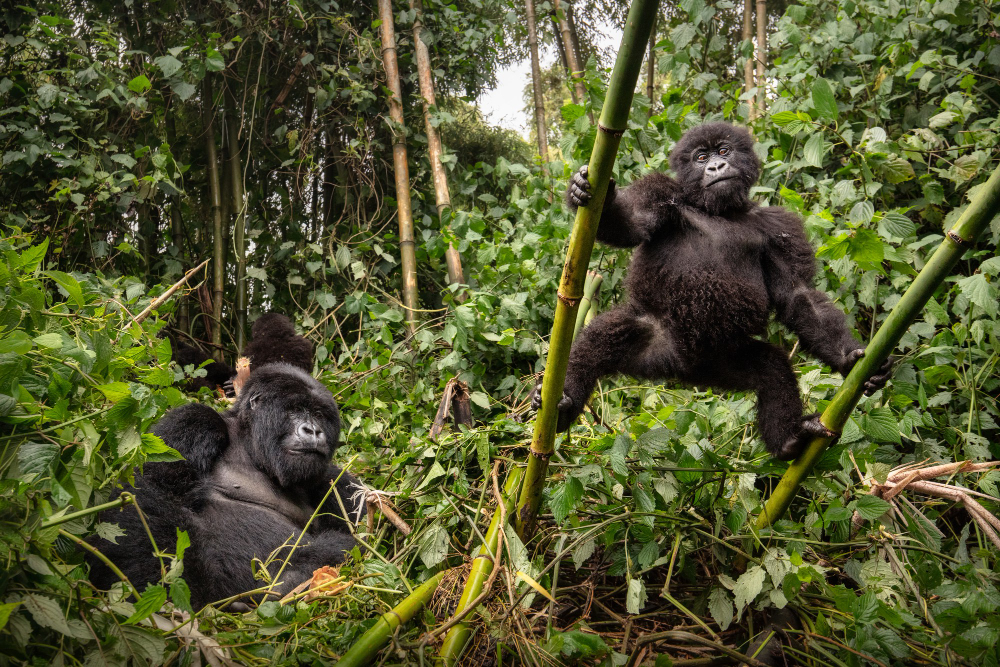
Gorilla trekking in Rwanda is a once-in-a-lifetime experience, offering an intimate encounter with endangered mountain gorillas in their natural habitat. But with permits costing $1,500 per person, many travelers wonder:
✔ How much does gorilla trekking in Rwanda really cost?
✔ How long is the trek to see the gorillas?
✔ How difficult is gorilla trekking in Rwanda?
✔ Is gorilla trekking worth the money?
This guide breaks down everything you need to know before booking this bucket-list adventure!
- How Much Does Gorilla Trekking in Rwanda Cost? 💰
Permit Cost:
- $1,500 per person (as of 2024) – This is the mandatory fee to trek in Volcanoes National Park.
Permits are limited (only 96 issued per day), so book months in advance!
Additional Costs:
✔ Accommodation – Luxury lodges like One&Only Gorilla’s Nest ($1,500+/night) or mid-range options ($300-$800/night).
✔ Transport – Private transfers from Kigali (~3 hours) cost ~$150-$300.
✔ Porters & Tips – Hiring a porter ($10-$20) is highly recommended for assistance. Tips for guides (~$20-$50) are customary.
💡 Total Estimated Cost for 3 Days: $3,000-$6,000+ per person (depending on lodging & extras).
- How Long Is the Gorilla Trek? ⏳
Trek Duration:
- 30 minutes to 8 hours (round trip) – Depends on gorilla family location.
- Average trek: 2-4 hours (1-2 hours uphill, 1 hour with gorillas).
What Affects Trek Length?
🌿 Gorilla movement – They roam freely, so trackers follow fresh signs (eaten bamboo, nests).
⛰ Terrain difficulty – Steep, muddy, and dense jungle paths slow progress.
🏞 Assigned gorilla family – Some groups are closer to the starting point than others.
💡 Pro Tip: If you prefer a shorter trek, request an “easier” group when booking.
- How Difficult Is Gorilla Trekking? 🥾
Physical Difficulty:
- Moderate to challenging – Expect steep climbs, slippery mud, and high altitude (~2,500m/8,200ft).
No set trails – Rangers cut through bamboo with machetes!
Who Should Avoid It?
❌ People with severe knee/back problems (uneven terrain).
❌ Those with extreme fitness limitations (trekking can be exhausting).
Tips to Make It Easier:
✔ Hire a porter (they help carry bags & push/pull you up slopes).
✔ Use a walking stick (provided at the start).
✔ Wear waterproof hiking boots (essential for mud!).
💡 Most travelers manage fine – The reward of seeing gorillas up close makes it worth the effort!
- Is Gorilla Trekking Worth the Money? 🏆
Why It’s Worth Every Penny:
✅ Rare wildlife encounter – Only 1,000 mountain gorillas exist in the wild.
✅ Unforgettable experience – Spending 1 hour just feet away from gorillas is
surreal.
✅ Conservation impact – Permit fees fund gorilla protection & local communities.
Who Might Regret It?
❌ If you hate hiking or struggle with physical activity.
❌ If you expect a zoo-like experience (this is raw, wild nature).
💡 Verdict: 100% worth it for wildlife lovers & adventure seekers!
Bonus: Best Time to Go & Packing List 🎒
Best Time for Gorilla Trekking:
- Dry seasons (June-September & December-February) – Less mud, easier trekking.
Wet season (March-May, October-November) – Lush greenery but slippery trails.
Packing Essentials:
✔ Sturdy hiking boots (waterproof!)
✔ Long-sleeved shirt & pants (protect from stinging nettles).
✔ Gardening gloves (for gripping bamboo).
✔ Rain jacket (weather changes fast!).
Final Thoughts 🦍💚
Gorilla trekking in Rwanda is a bucket-list adventure that’s challenging, expensive, but absolutely magical. If you’re ready for muddy hikes, breathtaking encounters, and supporting conservation, book that permit now!
Have questions? Drop them in the comments! 👇

1 Comment
This travel blog sounds exciting and inspiring! It seems perfect for anyone who loves adventure and exploring new places. I can’t wait to check out the destinations they recommend. The idea of daydreaming about trips from home is so comforting. What makes this blog stand out compared to other travel guides? Given the growing economic instability due to the events in the Middle East, many businesses are looking for guaranteed fast and secure payment solutions. Recently, I came across LiberSave (LS) — they promise instant bank transfers with no chargebacks or card verification. It says integration takes 5 minutes and is already being tested in Israel and the UAE. Has anyone actually checked how this works in crisis conditions?